
Child & Teen Mental Health Care in Cranford, NJ
You've noticed something is different. Maybe they've stopped talking. Maybe the meltdowns aren't ending like they used to, or the grades slipped, or they're anxious about things that never used to bother them.
Trusting your instinct here is the right call. Children and teenagers rarely have the words to explain what's happening inside them — which is exactly why so many young people go years without help.
Bethel Behavioral Healthcare Services provides therapy and psychiatric care for children and adolescents — in person at our Cranford office and by secure telehealth across Union County — led by Augustina Ike, MSN, APN, PMHNP-BC, a board-certified Psychiatric Mental Health Nurse Practitioner with over 17 years of clinical experience.
Come to the Cranford office, or meet by secure video from home — after-school appointments make it easier to fit care around the school day for families in Union, Elizabeth, Springfield, and Roselle.
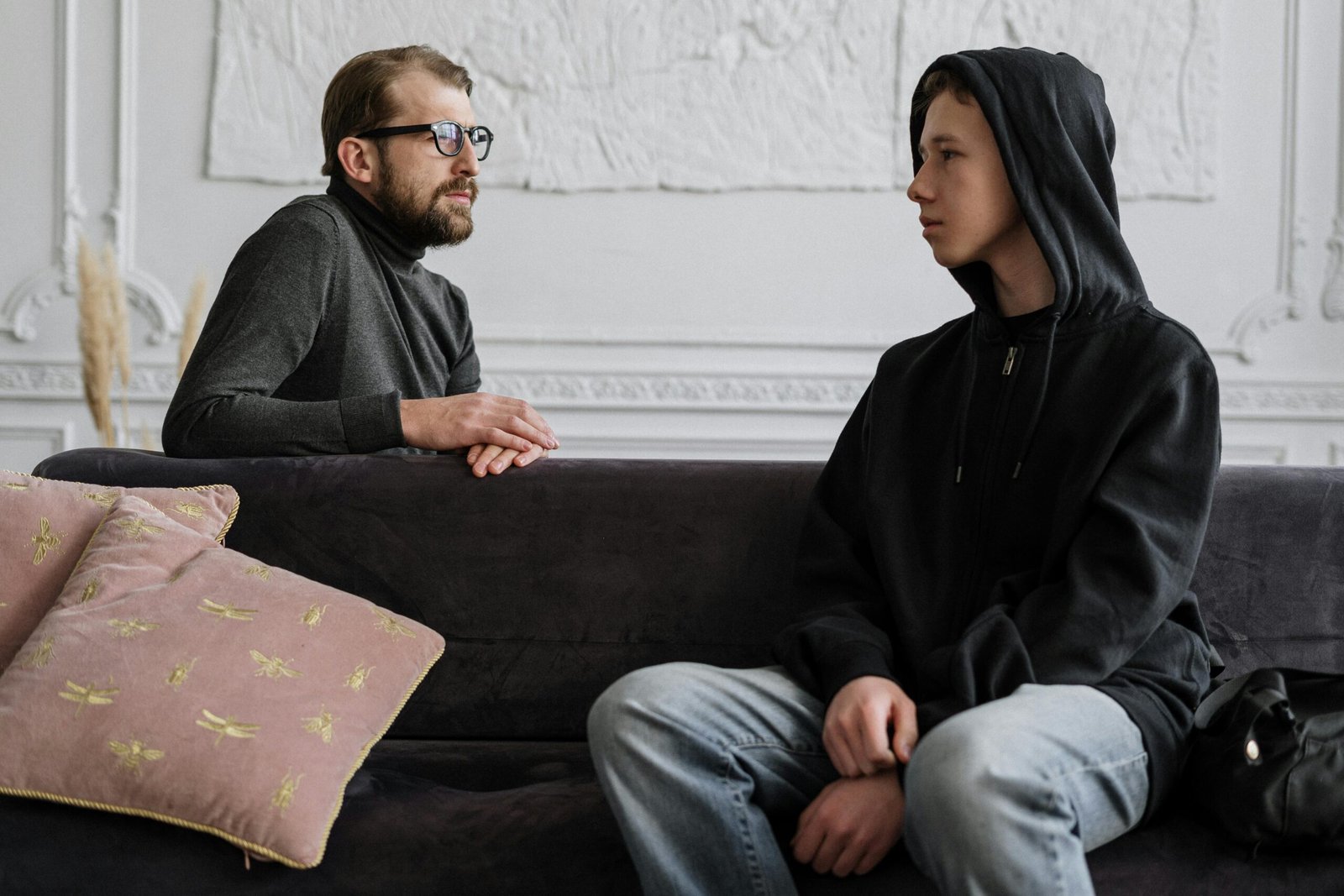
Signs it may be time to get help
Most parents wait far longer than they need to, usually because they're not sure the problem is "big enough." It doesn't have to be a crisis to be worth addressing.
- Anxious, irritable, or withdrawn in a way that's lasted more than a few weeks
- Struggling at school — grades, focus, refusal to go, trouble with teachers
- Sleeping far more or far less than usual
- Losing interest in friends, sports, or things they used to love
- Frequent meltdowns, anger outbursts, or physical complaints with no medical cause
- Dealing with bullying, social exclusion, or online pressure
- Processing a loss, a divorce, a move, or something frightening
- Talking about self-harm, hopelessness, or not wanting to be here
Support for what young people actually face
Anxiety
Generalised worry, separation anxiety, social anxiety, panic, and school refusal.
Depression & mood
Low mood, irritability, withdrawal, and loss of interest that isn't lifting on its own.
ADHD
Evaluation, diagnosis, and ongoing management, including support for school accommodations.
Behavioural challenges
Defiance, aggression, and emotional dysregulation that's straining the whole household.
School & social stress
Bullying, peer pressure, academic pressure, and difficult transitions between schools.
Trauma & grief
Loss of a loved one, family disruption, or a frightening experience that's still affecting them.
Autism spectrum support
Behavioural and emotional support alongside existing services and school-based programmes.
Family conflict
Communication breakdown between parents and children, and repeated conflict cycles.
Adjustment difficulties
Divorce, relocation, a new sibling, or immigration and cultural transition.
Care is faith-inclusive and culturally sensitive. Families from every background are treated with respect, and no child is ever asked to be someone they're not.
How we work with young people
Age-appropriate methods
Younger children are met through creative approaches — art, games, storytelling — because that's how children process what they can't yet say. Teenagers are met differently: evidence-based approaches including CBT and DBT-informed skills, delivered in a way that doesn't feel like being lectured.
Parents are part of the plan
You are not dropped off at the door. Parent coaching gives you practical tools for what happens between sessions — how to respond to a meltdown, how to set boundaries without escalation, how to talk to a teenager who won't talk back. Family sessions are available where they'll help.
Coordination with school
Where it's useful and you consent, Augustina can collaborate with teachers, counselors, and child study teams on school-related concerns, including accommodations and IEP-related matters.
Honest boundaries on privacy
Teenagers open up only when they trust the room is private. Age-appropriate confidentiality is respected, and its limits are explained clearly to both you and your child at the start — including the circumstances in which a parent will always be informed for safety.
What the first steps look like
Free parent consultation
You call first, without your child. Describe what you're seeing and ask whatever you need to. Nothing is diagnosed on this call — it's to confirm whether this is the right fit and the right level of care.
Initial assessment
The first full appointment — in person in Cranford or by video — gathers history from you and, depending on age, time with your child directly. Symptoms, developmental and medical history, school functioning, family context, sleep, and what you're hoping changes.
A plan you both understand
A clear explanation of what's going on and a recommended plan — therapy, parent coaching, school coordination, referral for additional testing, and in some cases medication, discussed carefully and never assumed.
Sessions and review
Progress is reviewed regularly with you. Plans change as your child changes, and you'll always know why.
About medication for children and teens
Medication is not the first answer, and it's never the only one.
When it's considered, it's discussed thoroughly with you first: what it's for, what to expect, what the alternatives are, and what happens if you'd rather not.
As a board-certified Psychiatric Mental Health Nurse Practitioner licensed in New Jersey, Augustina can evaluate, prescribe, and manage psychiatric medication where clinically appropriate. Some medications — including certain ADHD medications — carry additional requirements; because we also see patients in person at our Cranford office, those requirements are straightforward to meet, and everything will be explained plainly. No parent is pressured into a decision.
Care led by one clinician who knows your family
Augustina Ike, MSN, APN, PMHNP-BC
Board-Certified Psychiatric Mental Health Nurse Practitioner- 17+ years of clinical experience across crisis management, psychiatry, and addiction care
- Master of Science in Nursing, Walden University
- Licensed in New Jersey and New York
- NJ License 26NJ01306400 · NPI 1235875162
- Faith-inclusive and culturally sensitive care
- Appointments Monday to Friday, including after-school hours
In-network with most major insurers
Not using insurance, or don't see your plan?
Self-pay is straightforward, sliding-scale options are available, and superbills are provided for out-of-network families to submit for reimbursement.
If cost is the thing standing between your child and help, say so on the consultation call.
In person in Cranford — telehealth across Union County
In-person care for children and adolescents at our Cranford office, plus secure telehealth for families throughout Union County and New Jersey.
In-person visits are at 20 Commerce Dr, Suite 135, Cranford, NJ 07016. Telehealth runs on a secure, confidential video platform. Monday through Friday, including after-school hours.
Frequently asked questions
What ages do you see?
Do you offer in-person and online appointments for children?
Do I need to be in the room?
Do you need consent from both parents?
Can my child get an ADHD evaluation?
What if my child refuses to go?
Is what my child says kept private from me?
What do we need for an appointment?
You don't have to be certain to reach out
Start with a free 15-minute parent consultation. No cost, no obligation — just a conversation about what you're seeing and what might help.
In a mental health emergency, call or text 988 (Suicide & Crisis Lifeline) or dial 911. This practice is not a substitute for emergency services.